The 9th International Conference on Estuaries & Coasts (ICEC) was held from September 22 to 26 in Qinzhou, Guangxi in southern China, jointly hosted by IWHR and local government agencies.
Under the theme Estuaries and Coasts under Modern Civilizations, Entering a New Era of Artificial Intelligence,” the Conference brought together approximately 300 experts and scholars from 22 countries to explore emerging challenges and innovations in estuarine and coastal research and management.
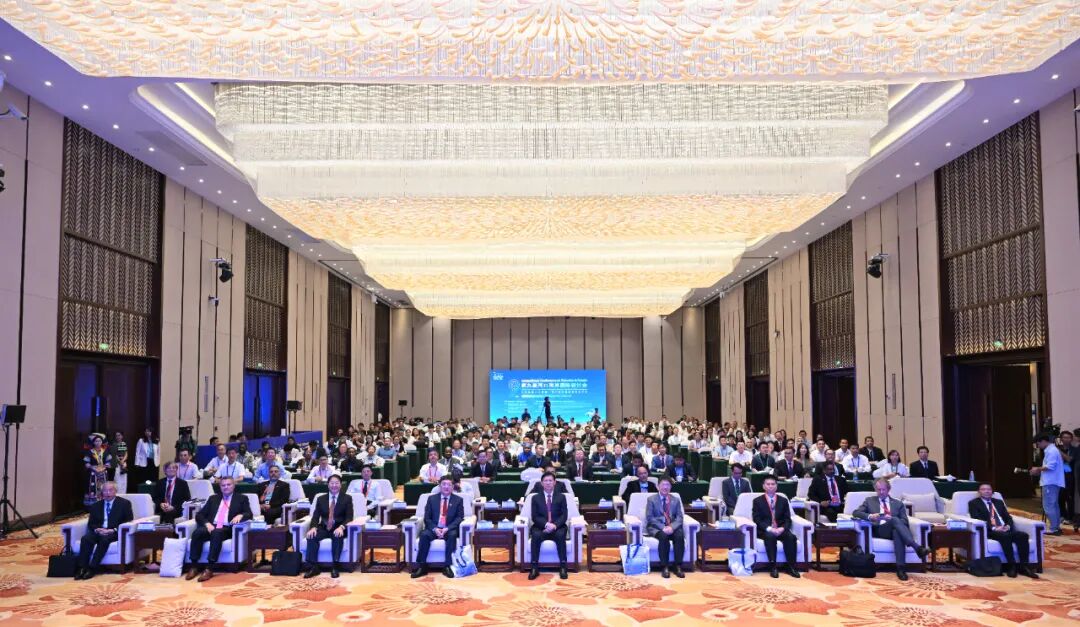
Dr. Wang Jianhua, President of IWHR and Director of the UNESCO International Research and Training Center on Erosion and Sedimentation (IRTCES), which is stationed at IWHR, highlighted the close alignment between estuarine and coastal development and multiple goals of the United Nations 2030 Agenda for Sustainable Development in his opening remarks. The Conference addressed pressing global challenges, including coastal economic development, disaster prevention and mitigation, and coastal wetland conservation amid climate change, while also reflecting the growing role of digital technologies in advancing water science and responded to the urgent need for sustainable, high-quality development in estuarine and coastal regions, he noted.
Representing UNESCO, Abou Amani, Acting Assistant Director-General, and Cristiane Collet Battiston, Chair of UNESCO’s Intergovernmental Hydrological Programme (IHP) and Director of Brazil’s National Water and Sanitation Agency, highlighted the importance of scientific innovation, integrated water resources management, and resilience in addressing challenges facing estuaries and coastal regions. Both emphasized the need to deepen scientific understanding of hydrodynamic processes, sediment transport, and morphological evolution in estuaries, coastal areas, and deltas, while strengthening monitoring and early-warning systems and protecting aquatic ecosystems to support sustainable water resources management.
A major highlight of the Conference was the release of the Qinzhou Initiative for Global Sustainable Development of Estuaries and Coasts. The initiative calls for stronger academic exchange, greater use of evidence-based science in estuarine and coastal governance, and broader collaboration among stakeholders to build a safer, more prosperous, and more resilient future for estuarine and coastal regions worldwide.
Initiated by IRTCES in 2003, the ICEC has now been held nine times, serving as an important platform for international scientific exchange and cooperation. This year’s edition received over 120 papers across four academic themes and featured 10 keynote presentations, 16 invited presentations, 60 thematic presentations, and 48 poster presentations.
The event also included technical field visits to several major infrastructure and ecological restoration projects, including the Madao Hub of the Pinglu Canal, the automated sea–rail intermodal terminal in Qinzhou, and the comprehensive shoreline ecological restoration project along the Jingu River.
