
Contributors: REN Hejing, ZHANG Baozhong, LIU Qunchang, SONG Ruiyong, TAO Yuan, FU Jing, WANG Quanlong, PAN Fuqu, DONG Zhilin, ZHAO Liping, GONG Yiteng, YAN Qinghong, ZHAO Zhi
Food security underpins social prosperity, while agriculture forms the foundation of a stable country. Large- and medium-sized irrigation districts serve as the cornerstone of China’s food security, with irrigation and drainage engineering system constituting the foundation of their development. The construction of large-scale irrigation and drainage pipeline networks reflects the enhancement of the system’s efficiency.
With the advancement of pipeline-based irrigation districts and the large-scale construction of irrigation pipeline networks, existing design theories, methods, technologies, equipment, and standards for irrigation and drainage pipeline networks are increasingly insufficient to meet the demands for complex and large-scale pipeline systems under varying topographic conditions. Meanwhile, the growing trend of farmland waterlogging in recent years has exposed the need to improve the integrated irrigation and drainage technology system. Therefore, there is an urgent need for comprehensive and in-depth research on coordinated pipeline water conveyance irrigation and drainage technology system.
This research aims to support large-scale pipeline irrigation, realize integrated pipeline irrigation and drainage, enhance agricultural disaster prevention and mitigation capacity, and safeguard national food security.
· A simulation model for safety regulation of water conveyance and distribution in large-scale irrigation pipe networks was developed. This model integrates complex processes, including water diversion, pressure regulation, and air venting, within the spatiotemporal domain of irrigation into unsteady flow simulation.
· An optimization framework for multi-objective, coordinated large-scale irrigation and drainage pipe networks will be established, based on the principles of shared synergy and multi-process coupled simulation.
· Key and control equipment suitable for the safety regulation of large-scale irrigation pipeline networks will be developed. An integrated automatic control system for the safe operation of large-scale irrigation pipeline networks incorporating information collection, processing, feedback, monitoring, and decision-making will be designed.
· Categorized coordinated regulation technology models for pipeline irrigation and drainage for different terrain conditions and irrigation methods will be developed. Technical standards and specifications for pipeline irrigation and drainage engineering will be formulated to improve relevant standards system.
· Having applied a fully implicit time scheme for spatially discrete unconditional stable solution algorithms and developed a multi-process coupled simulation model, achieving full-dynamics real-time simulation of irrigation pipeline networks.
· Having established a multi-objective optimization design model for large-scale irrigation pipeline networks, with total cost and safe operation as objective functions and constraints such as economic flow velocity considered, as well as corresponding design platform.
· Having established an adaptive integrated irrigation and drainage theory and intelligent regulation technology based on the innovative concept of shared irrigation and drainage coordination, and a coordinated pipeline irrigation and drainage model.
· Having developed online monitoring technology and cost-effective monitoring equipment for large-diameter pipeline flow (pressure) in large-scale pipeline networks, a novel double-chamber externally connected air release valve, intelligent control equipment for integrated pipeline irrigation and drainage, and multi-hole bridge-type structured wall pipe along with its manufacturing process.
· Having developed categorized models for the construction and safe operation of large-scale pipeline irrigation-drainage networks in China based on regional characteristics and a technical standards system for those pipeline systems, achieving standardized full lifecycle management of irrigation-drainage network engineering technologies.
Tthe research achievements have been widely implemented in the renovation of large- and medium-sized irrigation districts and the construction of high-standard farmland in regions such as Xinjiang, Shandong, Shanxi, Shaanxi, Hebei, Henan, and Inner Mongolia Autonomous Region after nearly a decade of R&D and application. According to incomplete statistics, the application area has reached over ten million mu (more than 666,700 hectares) from 2017 to 2025, delivering significant benefits in water conservation, yield improvement, operational efficiency, and land-use savings, along with notable flood drainage and disaster mitigation effects. The application of these achievements is of major strategic importance for advancing the development of pipeline-based irrigation water conveyance in China, promoting the renovation and construction of large- and medium-sized irrigation districts, and safeguarding national food security.
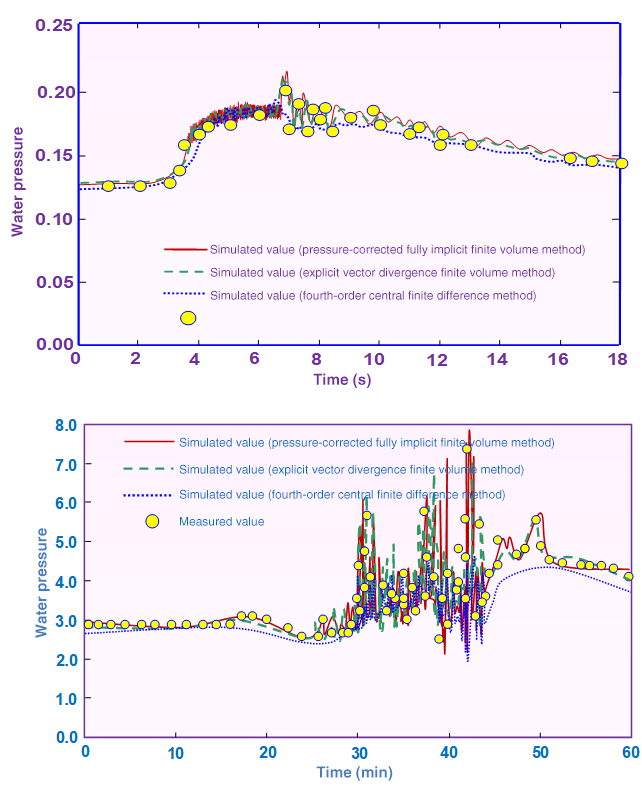
Figure 1 Validation of the multi-process coupled simulation model
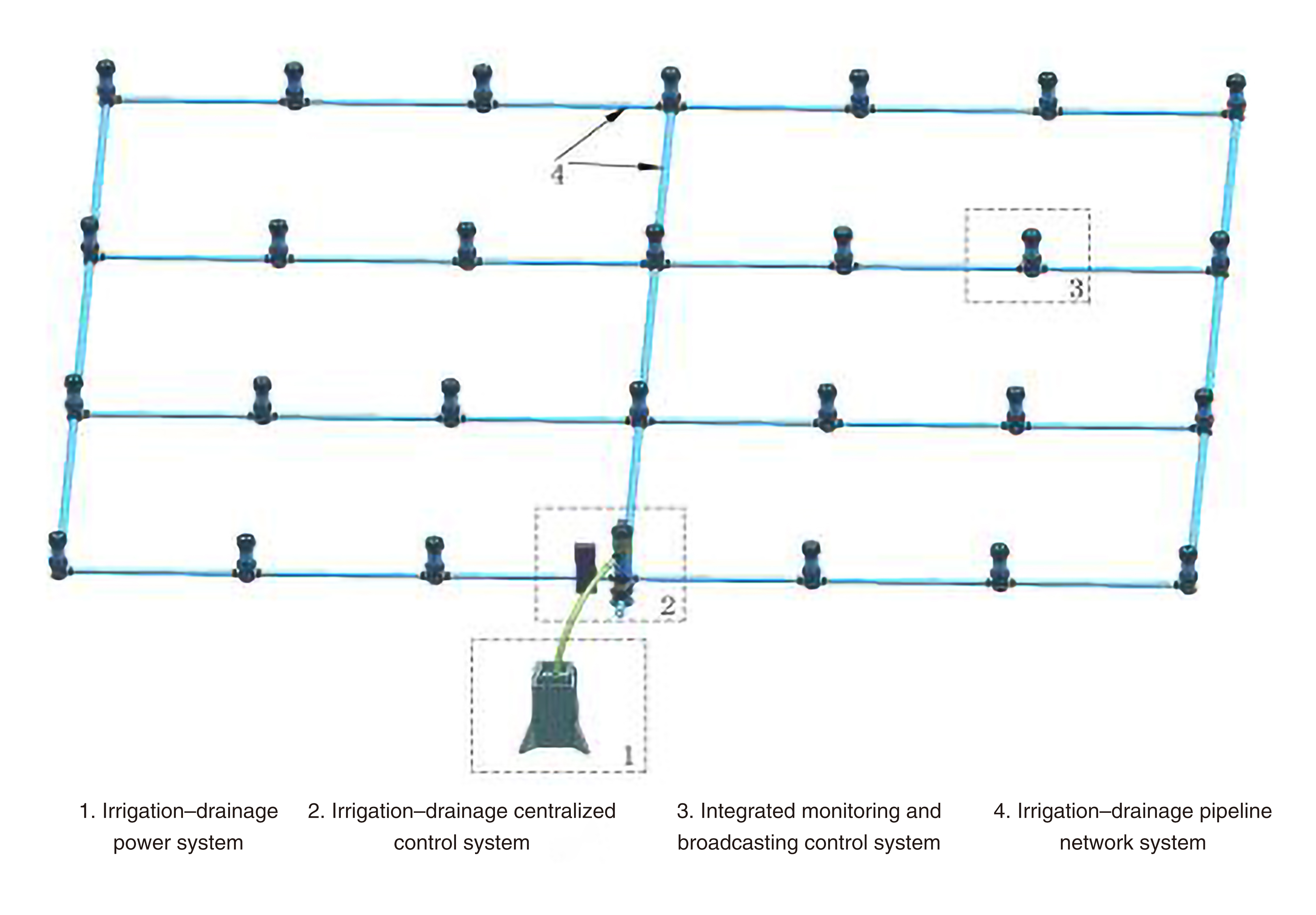
Figure 2 Diagram of the integrated irrigation and drainage pipeline network system
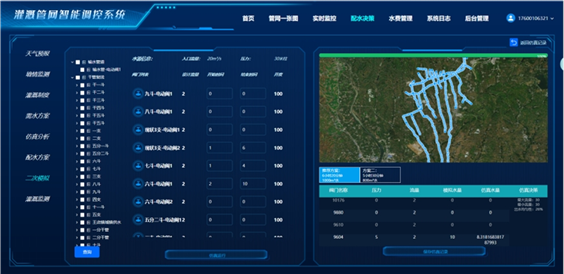
Figure 3 Simulation interface of the intelligent regulation and control system for
the irrigation pipeline network
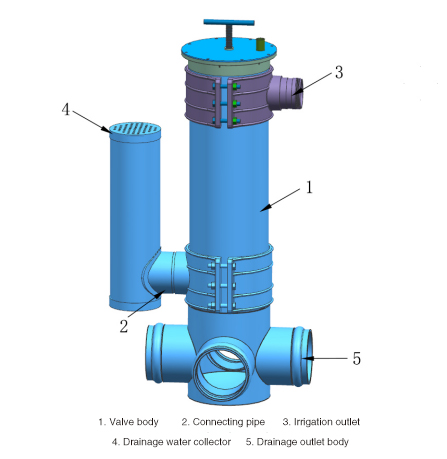
Figure 4 Schematic diagram of irrigation and drainage equipment
