
Contributors: HAN Changlin, ZHANG Weijun, HE Ting, ZHANG Hailong, WEN Zhengguo, SHI Xiaoqian, HAN Wenjun, ZHANG Hongyan, YAN Xianbo, HAN Feng, ZHU Xueqin, GUAN Yutong, DONG Jindan, GONG Xinyi, ZHU Yuliang
1.1 Background
Under the national goals of carbon peak and carbon neutrality , the large-scale grid connection of new energy sources has become a defining feature of the new-type hydropower system. Pumped storage hydropower stations play a critical role in ensuring a secure and stable hydropower supply and accommodating new energy generation. By 2030, China's installed pumped storage hydropower capacity is projected to exceed 120 GW, making cluster-based monitoring and control an inevitable development trend. Compared with conventional hydropower units, pumped storage units undergo frequent daily start-stop cycles and multiple operating mode transitions. These operational characteristics elevate equipment failure risks, generate massive volumes of monitoring data, and impose heavy burdens on control operations. Consequently, centralized remote monitoring of pumped storage hydropower stations demands higher technical standards, necessitating breakthroughs in key technologies such as intelligent high-security monitoring for ultra-large-scale pumped storage hydropower station clusters, efficient station-to-control-center communication, and high-availability assurance for the centralized monitoring platform.
· Design and develop an autonomous, controllable, and intelligent centralized control platform for 10 GW-class pumped storage hydropower station clusters.
· Study the intelligent auxiliary monitoring, anti-misoperation control , and intelligent fault diagnosis and troubleshooting technologies for centralized control of pumped storage hydropower stations.
· Study the extended applications of communication protocols between plant stations and the centralized control center, along with data integrity assurance mechanisms.
· Develop technologies for real-time, high-efficiency processing of massive data streams, as well as non-disruptive commissioning and scalable expansion methods for integrating newly constructed plants into the centralized control system.
· Established an intelligent remote centralized control technology framework for pumped storage hydropower station clusters, and developed intelligent monitoring functions, including agile identification of critical information based on a holographic object tree architecture, intelligent alarm correlation analysis, and equipment status scanning.
· Proposed a multi-dimensional safety anti-misoperation mechanism covering human, equipment, environment, and management factors, which is tailored to the operational characteristics of pumped storage hydropower station clusters, along with equipment verification strategies, and invented a multi-level chain-of-thought fault locating technology that integrates procedural logic judgment with an O&M experience knowledge base.
· Developed a load-balancing technology for communication clusters in pumped storage hydropower stations, and created an automated data synchronization and correction method between plant stations and the centralized control center, featuring automatic point-list discrepancy verification with notification and resumable data transfer functions.
· Successfully developed an intelligent centralized control platform for 10 GW-class pumped storage hydropower station clusters, proposed server-cluster collaborative control and real-time concurrent processing approaches for massive data, and established a commissioning methodology in a mirrored environment for the integration of plant stations into the centralized control system, ensuring zero interruption to real-time business operations.
The research outcomes have been successfully deployed in the monitoring system construction (or reconstruction) projects of CSG Energy Storage Centralized Control Center , as well as in seven pumped storage hydropower stations, including Changlongshan, Huizhou Zhongdong, Zhejiang Tiantai, Guangxi Nanning, Hubei Dawu, and Huizhou Pumped Storage Hydropower Stations. Following implementation, the outcomes have significantly enhanced O&M efficiency for both individual pumped storage hydropower stations and centralized control centers, while substantially strengthening safety protection capabilities for production runs. These achievements have demonstrated robust engineering applicability and practical value.
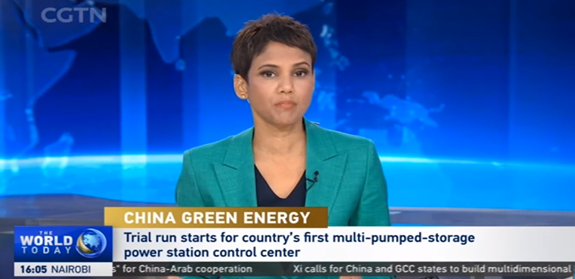
Figure 1. CCTV International Channel Report: Trial Run Starts for China's First Multi-Pumped-Storage Hydropower Station Control Center
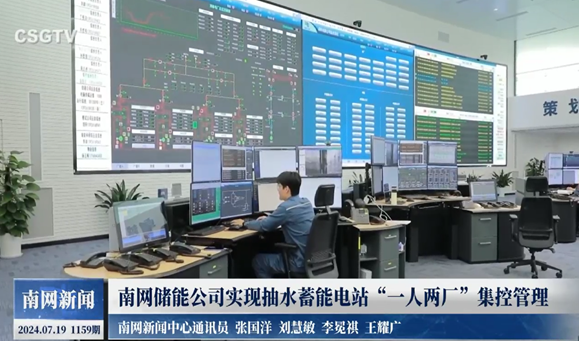
Figure 2. China Southern Power Grid News Report: CSG Energy Storage Centralized Control Center Enables "One Operator, Two Plants" Duty Mode for Pumped Storage Hydropower Stations
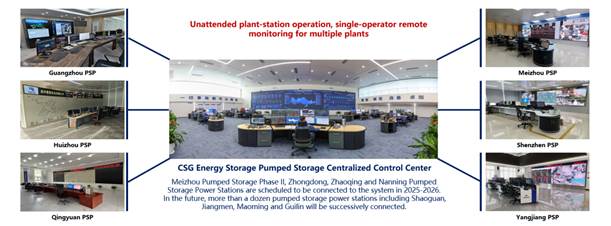
Figure 3. Schematic Diagram of Pumped Storage Hydropower Station Integration into CSG Energy Storage Centralized Control Center
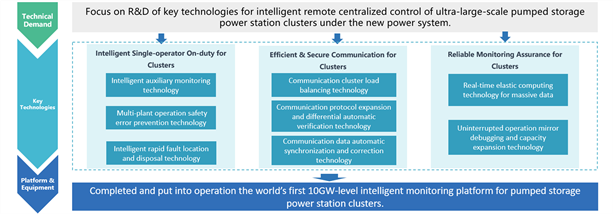
Figure 4. Key Technologies for Intelligent Remote Centralized Control of Pumped Storage Hydropower Station Clusters
