Team Introduction
Since the 18th National Congress of the CPC, ecological civilization construction has been elevated to a national strategy, with the concept of systematic governance gaining widespread acceptance. The digital twin technology in water conservancy has become a crucial tool for achieving high-quality development of water conservancy in the new stage. The river system is an organic whole, and there is an urgent need to break down disciplinary barriers to study the multi-element coupling mechanism of sediment-related environment elements and construct a comprehensive multi-element process model, thereby creating a domestically developed, technologically advanced multi-element coupling simulation system for sediment-related environment. In order to better reflect the interdisciplinary interaction between water-sediment dynamics and sediment-related environment elements, and to comprehensively improve the theoretical and technological capabilities in simulating multi-element interactions within sediment-related environment in rivers, lakes, reservoirs, estuaries and coasts, the Hydro-Sediment Environment Simulation Team was established in January 2021. This team is dedicated to theoretical research, technological breakthroughs, product development, and application of sediment-related environment processes. Their research direction has been identified as a key research priority by the Ministry of Water Resources.
Dr. HUANG Hai, the principal contributor, serves as the Deputy Director of the section of Hydro-Sediment Environment Simulation at the Department of Sediment Research. He is engaged in the research of hydraulics and river dynamics, the theory and simulation technology of sediment-related environment. Dr. HUANG has led and participated in over 20 national, provincial-level research projects, including the National Natural Science Foundation of China (NSFC) Youth Fund Project, the 13th Five-Year National Key Research and Development Program, the NSFC Joint Fund, major scientific and technological projects of the Ministry of Water Resources, and the "Three-type Talents" Program of the China Institute of Water Resources and Hydropower Research (IWHR). He has published more than 20 academic papers, including 12 SCI/EI indexed articles, obtained 9 invention patents and 3 software copyrights, and published one monograph. Dr. HUANG has been awarded a Special Prize for Scientific and Technological Progress by the China National Committee on Large Dams, a First Prize for Dayu Scientific and Technological Progress Award, a Special Prize and a First Prize for Science and Technology by IWHR. Additionally, he has been honored with the title of "Three-type Talents" during the "14th Five-Year Plan" period by IWHR and has received a "Meritorious Service" commendation from IWHR.
The team integrates talent from three generations - senior, middle-aged, and young, forming a well-structured, experienced and dynamic echelon team. The senior members, all renowned experts in the field, offer decision-making support to the team. The middle-aged and young members, serving as the backbone of the team, propelling the team forward with their acute market insight and innovative spirit. The team is dedicated to the theoretical research, technological breakthroughs, product development, and application of sediment-related environment, and has achieved numerous innovative results.
Theoretical advancement:
Established the statistical theory of bedload transport and the energy dissipation theory.
Technological breakthroughs:
· Developed a multi-dimensional (1D, 2D, 3D) integrated water-sediment mathematical model system based on Academician HAN Qiwei's original theory of non-uniform and non-equilibrium sediment transport.
· Made breakthroughs in the multi-element (such as P and C) coupling simulation technology for sediment-related environment.
· Established an analysis method for the impact of sediment replenishment on hydro-sediment environment.
· Achieved rapid prediction techniques for water-sediment dynamics in river networks across large spatiotemporal scales and optimized allocation methods for sediment resources using machine learning.
Product development:
Built a standardized, full-process operation platform system for general mathematical model for sediment transport, leveraging cutting-edge technologies such as database management, geographic information systems, and 3D simulation earth, providing robust support for digital twin application in water conservancy.
Applications:
· Delivered critical technical support for maintaining the effective storage capacity and enhancing the comprehensive benefits of the Three Gorges Reservoir.
· Provided strong support for the China-Russian negotiations and governance on transboundary water, with the related achievements earning letters of appreciation from both the Ministry of Water Resources and the Ministry of Foreign Affairs.
Since its establishment in 2021, the team has led and participated in more than 20 national, provincial and ministerial research projects. The related research achievements have been awarded one special prize, one first prize, and one second prize at provincial and ministerial-level, as well as one special prize and one first prize for science and technology from IWHR. Their work has been selected for inclusion in the Ministry of Water Resources' Key Promotion Guidance Catalog of Advanced Practical Technologies, the Mature and Applicable Water Resources Science and Technology Achievements Promotion List, and the Ministry of Science and Technology's Technology List for Sustainable Development in Belt and Road Countries. The team has published 16 SCI-indexed papers and has been granted more than 10 invention patents. In terms of talent cultivation, one team member has been recognized as a Young Top-notch Talent by the Ministry of Water Resources; three have been awarded the "Three-Type Talents" title by IWHR; one has been included in the Youth Talent Support Program of the China Society for Hydropower Engineering; and one has been included in the Youth Talent Support Program of IWHR. Additionally, the core members of the team have been included in two ministerial-level innovation teams.
The Department of Sediment Research is an important component of the State Key Laboratory of Simulation and Regulation of Water Cycle in River Basin, and it is also the supporting unit for the Key Laboratory of Sediment Science and Northern River Regulation. Leveraging the platforms of these national and ministerial-level key Laboratories, the department provides the necessary software and hardware conditions to support the innovative development of the research team. At the same time, the team benefits from stable funding support through national, provincial and ministerial-level research projects, which also lays a solid material foundation for team building, talent cultivation, collaborative exchange, and equipment support. In the future, the team will continue to strengthen its expertise in the traditional field of sediment research, while also expanding its efforts in the field of sediment-related environment, aiming to advance numerical simulation of water-sediment dynamics and contribute to solving sediment-related environment challenges in China.
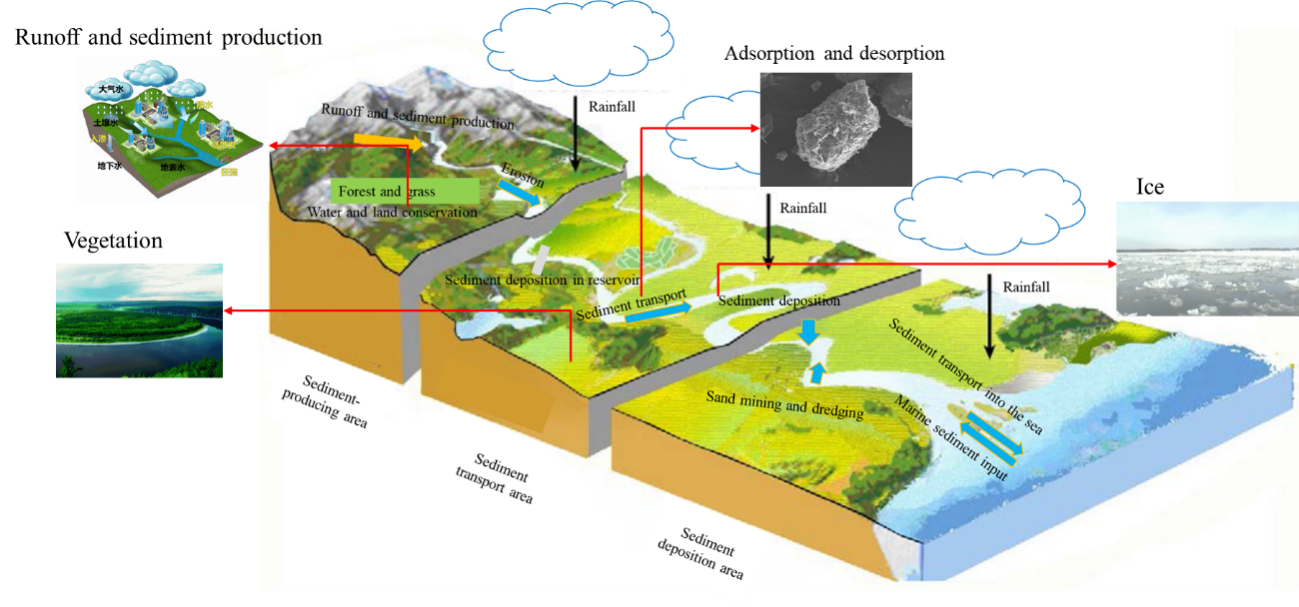
Figure 1. Schematic diagram of sediment-related environment processes
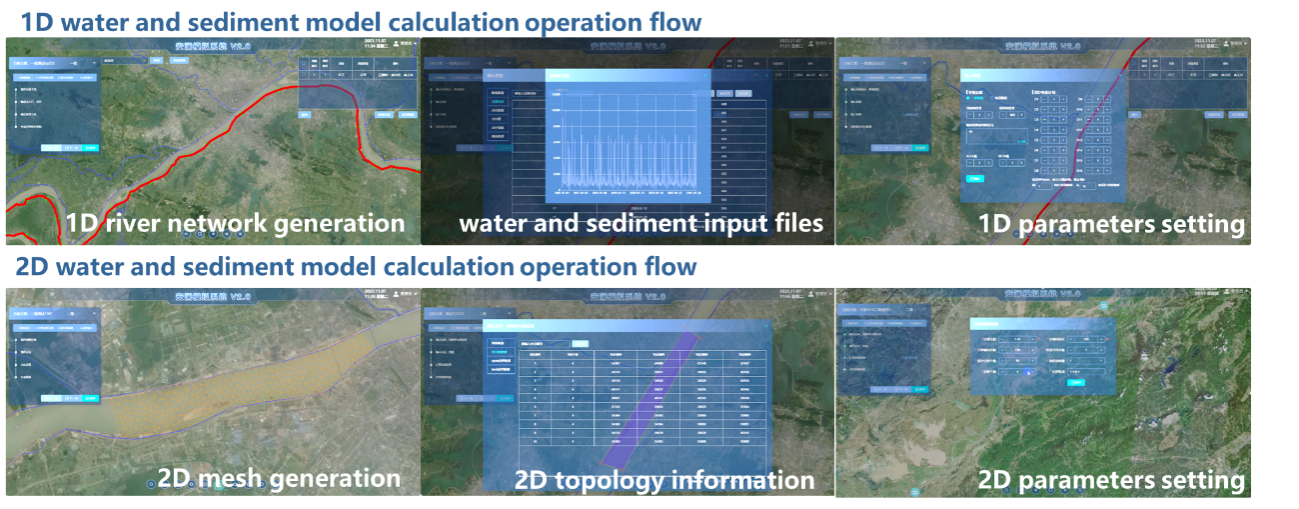 Figure 2. Schematic Diagram of the cross-scale all-dimensional environment simulation system workflow
